# The Complete Guide to Hiring a Professional Embroidery Digitizing Company!
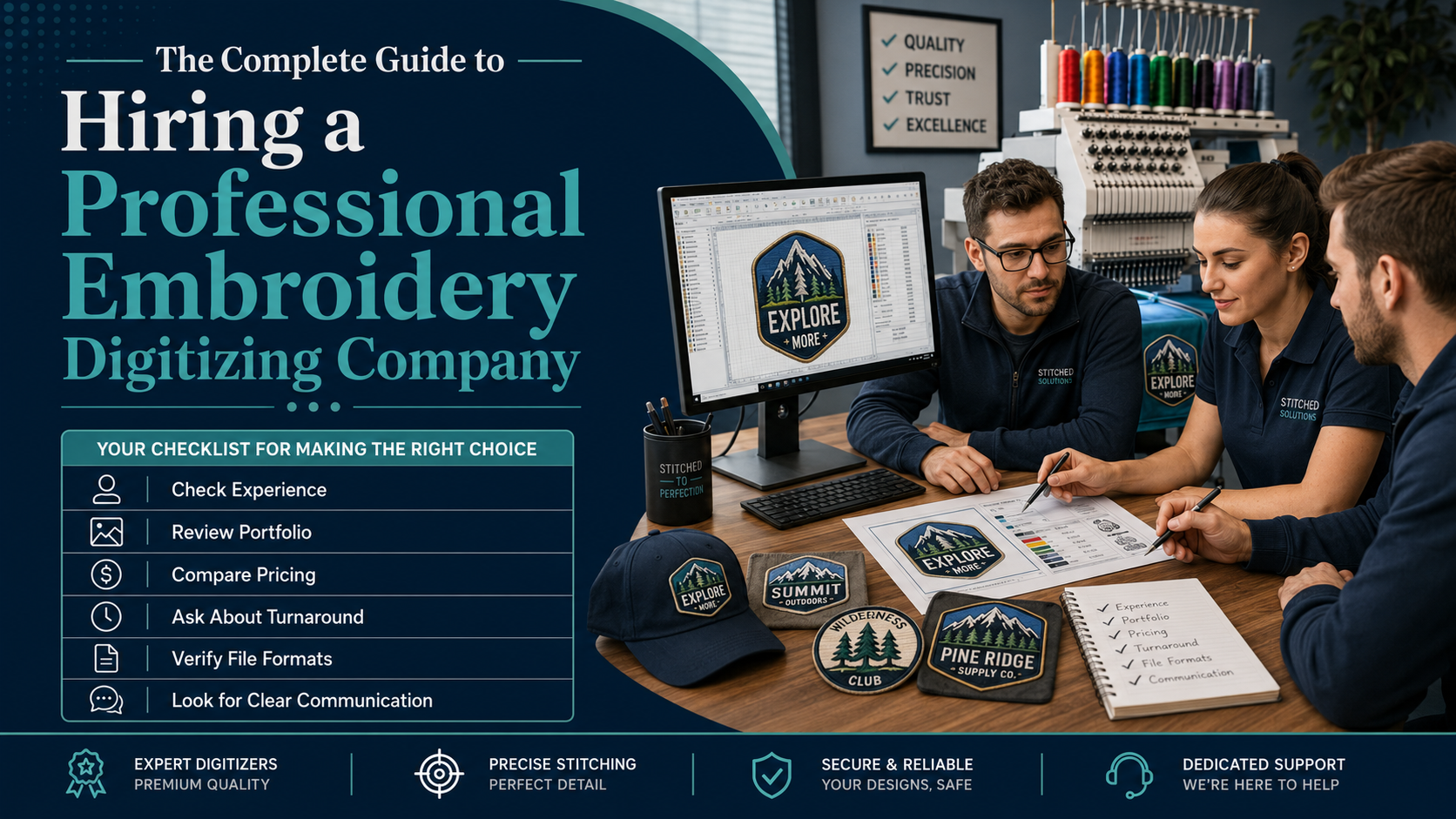
Choosing the right **[Professional Embroidery Digitizing Company](https://idigitize.com/)** is one of the most important decisions for any embroidery business. The quality of a digitized embroidery file directly affects stitch accuracy, production speed, fabric appearance, and machine performance. A well-prepared file helps reduce thread breaks, puckering, unnecessary trims, and production delays, while a poorly prepared file can lead to wasted garments and higher operating costs.
Whether you own an embroidery shop, manage a custom apparel business, or produce promotional products, selecting a reliable digitizing partner can improve efficiency and deliver consistent embroidery results. This guide explains the most important factors to consider before hiring a professional embroidery digitizing company.
## Why Choosing the Right Company Matters
Embroidery digitizing is much more than converting artwork into an embroidery file. Every design requires careful planning of stitch types, stitch direction, underlay, density, pull compensation, and sequencing to ensure the design runs smoothly on an embroidery machine.
A professional company understands how different fabrics, thread types, and embroidery machines affect the final result. Their experience helps produce embroidery files that minimize production problems while maintaining clean and accurate stitching.
Hiring an experienced company also provides peace of mind when working with customer orders, especially for businesses handling commercial embroidery every day.
## Evaluate Their Experience
Experience is one of the first things you should evaluate before choosing a digitizing service.
An experienced company has likely worked with a wide variety of embroidery projects and understands the technical adjustments required for different applications. This includes business logos, caps, uniforms, patches, jacket backs, small lettering, appliqué designs, and 3D puff embroidery.
Different embroidery projects require different digitizing techniques. A company with broad experience knows how to adjust stitch density, underlay, pull compensation, and stitch direction according to the fabric and embroidery placement.
## Review Their Portfolio Carefully
A portfolio provides valuable insight into the quality of a company's work.
Instead of focusing only on digital previews, look for actual embroidery sew-out photographs. Finished embroidery samples show how the design performs on fabric and reveal details that may not appear in computer-generated previews.
When reviewing samples, pay attention to:
* Clean outlines
* Smooth fill stitching
* Sharp lettering
* Balanced stitch density
* Accurate design registration
* Professional finishing
Consistent quality across multiple projects is usually a good indicator of an experienced embroidery digitizing team.
## Confirm Supported File Formats
Embroidery machines use different file formats depending on the manufacturer and model.
Before placing an order, verify that the company supports the file format required by your embroidery machine. Common embroidery formats include DST, PES, EXP, JEF, VP3, HUS, XXX, and EMB.
Many professional companies also provide production worksheets that include stitch count, design dimensions, color sequence, and thread information. These details help embroidery operators prepare machines more efficiently.
## Ask About Turnaround Time
Meeting customer deadlines is essential for every embroidery business.
Ask about the company's standard turnaround time as well as rush-order services before placing your order. A reliable company should clearly explain normal delivery times, revision schedules, weekend availability, and their ability to handle large production orders.
Be cautious of companies that promise extremely fast delivery without reviewing the complexity of the design. High-quality embroidery digitizing requires careful planning, and complex artwork naturally requires more preparation.
## Understand the Revision Policy
Even professionally prepared embroidery files may require small adjustments after the first test sew-out.
Before hiring a company, ask whether revisions are included in the quoted price and what types of changes are covered. Common revisions include stitch density adjustments, lettering improvements, size modifications, pull compensation corrections, stitch direction changes, and color sequence updates.
A transparent revision policy reduces unexpected costs and helps avoid production delays if modifications become necessary.
## Compare Overall Value Instead of Price Alone
Many businesses compare services primarily by price. However, the lowest price does not always provide the best long-term value.
Poor-quality embroidery files often result in thread breaks, excessive stitch counts, fabric puckering, poor registration, and unnecessary machine downtime. These issues can increase production costs far beyond the initial savings.
When comparing providers, evaluate the complete service package, including quality, turnaround time, customer support, revision policy, file compatibility, production knowledge, and long-term reliability.
Paying slightly more for an experienced company may reduce overall production expenses by preventing costly embroidery problems.
## Assess Their Fabric Knowledge
Every fabric behaves differently during embroidery.
Materials such as caps, towels, fleece, leather, denim, performance fabrics, and stretch garments all require different digitizing settings. Stitch density, underlay, compensation, and stitch length must be adjusted to match each material.
A knowledgeable embroidery digitizing company will usually ask about the fabric before beginning the project. This information allows them to prepare an embroidery file that performs correctly on the intended garment.
Ignoring fabric characteristics often leads to distortion, puckering, or poor stitch quality.
## Evaluate Communication
Clear communication helps prevent misunderstandings throughout the production process.
A reliable company should respond promptly, confirm project specifications, clarify uncertain details, and provide updates when necessary. Effective communication reduces mistakes involving design size, placement, colors, file formats, and delivery schedules.
Companies that communicate professionally generally provide a smoother overall customer experience.
## Review Their Quality-Control Process
Quality control is one of the biggest advantages of working with an experienced embroidery digitizing company.
Before delivering embroidery files, many professional companies inspect important technical elements such as stitch density, underlay, pull compensation, trims, jump stitches, stitch sequencing, small lettering, color changes, and machine compatibility.
These final inspections help improve consistency while reducing production issues during embroidery.
## Read Customer Reviews
Customer reviews provide useful insight into a company's performance.
Look for reviews on Google, social media platforms, embroidery communities, and business directories. Instead of focusing only on overall ratings, read detailed customer experiences that discuss embroidery quality, delivery speed, communication, revision support, and handling of urgent projects.
Consistent positive feedback over time usually indicates dependable service.
## Place a Test Order First
Before committing to ongoing work, place a small test order.
Select a design that includes outlines, fill stitches, lettering, and fine details. After receiving the embroidery file, perform a complete sew-out on the intended fabric.
During testing, evaluate stitch quality, design registration, lettering clarity, thread performance, fabric stability, and the overall appearance of the finished embroidery.
A test order allows you to verify the company's capabilities before assigning larger production jobs.
## Build a Long-Term Working Relationship
Finding a dependable embroidery digitizing company offers benefits beyond a single order.
As your working relationship develops, the company becomes familiar with your preferred embroidery machines, file formats, production standards, garment types, and quality expectations. This familiarity often improves consistency, reduces communication time, and simplifies future projects.
A trusted long-term partner can contribute to smoother production and more efficient business operations.
## Final Thoughts
Hiring a **Professional Embroidery Digitizing Company** involves much more than comparing prices. Experience, portfolio quality, turnaround time, revision policies, communication, fabric knowledge, and quality-control procedures all play important roles in producing embroidery files that perform reliably during production.
Before assigning large or recurring projects, take the time to review previous work, ask detailed questions, and place a small test order. This approach helps you identify a service provider capable of delivering consistent, production-ready embroidery files.
At **iDigitize**, we focus on providing accurate embroidery digitizing services backed by experienced professionals, dependable customer support, and reliable turnaround times. Every embroidery file is prepared with production performance and stitch quality in mind, helping businesses achieve clean and consistent embroidery results.